
Blog
What’s Hiding in Your Commercial Parking Garage? The Maintenance Problems Property Managers Shouldn’t Ignore
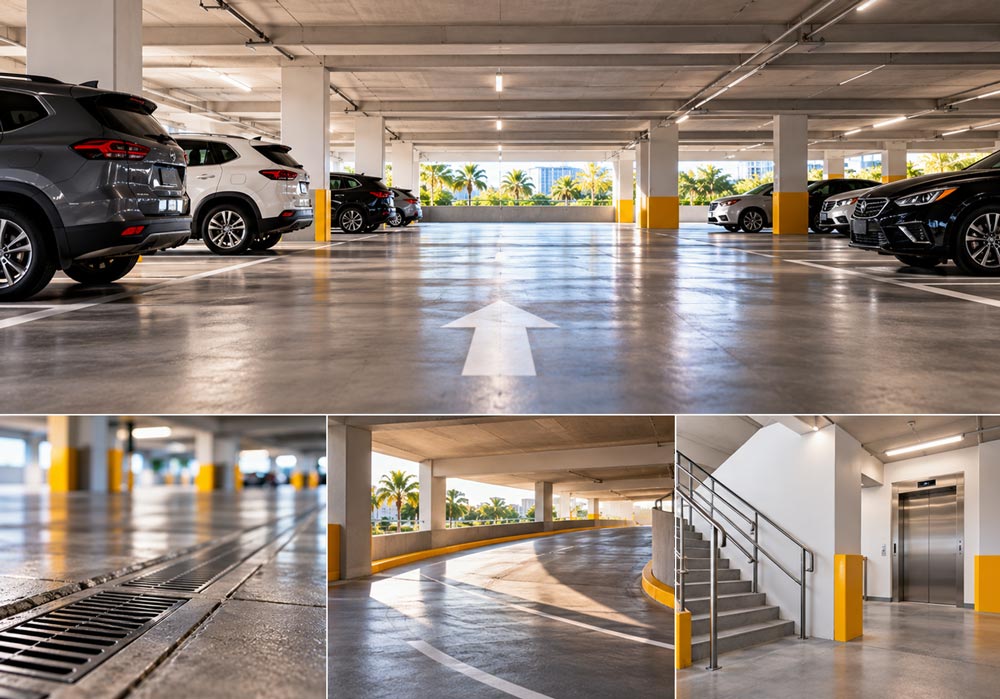
For many commercial properties, the parking garage is one of the most heavily used areas of the building—and one of the easiest to overlook.
Employees arrive through it every morning. Customers park there. Tenants walk through it daily. Deliveries pass through it. Vehicles continuously bring in water, dirt, oil and road residue.
Yet while lobbies, offices and common areas usually receive regular attention, parking garages can go months without the same level of detailed cleaning and maintenance.
Over time, that neglect becomes visible.
Oil stains spread across parking spaces. Tire marks darken driving lanes. Dirt accumulates along walls and curbs. Drains collect debris. High-traffic areas become increasingly discolored, and the entire garage can begin to look older and less maintained than the property it serves.
For property and facility managers, the garage deserves more attention than it often receives.
Your Property May Make Its First Impression in the Garage
The front lobby isn’t always the first part of a commercial property that people experience.
For many tenants, employees, customers and visitors, it’s the parking garage.
A garage with heavily stained concrete, accumulated grime, dirty walls and neglected entrances can influence someone’s impression of the property before they ever step inside the building.
The opposite is also true.
A clean, well-maintained garage reinforces the impression that the entire property is professionally managed.
This is especially important for office buildings, condominiums, medical and professional facilities, hotels, retail properties and other commercial environments where appearance contributes to the overall experience.
Oil and Automotive Residue Require More Than Routine Cleaning
Parking garages are exposed to contaminants that aren’t typically found inside an office building.
Vehicles can leave behind oil, grease, automotive fluids, tire residue and road grime. Once these substances penetrate or accumulate on concrete surfaces, basic sweeping or occasional rinsing may not be enough.
Professional degreasing and power washing can help break down stubborn buildup and restore heavily used surfaces more effectively.
Addressing these areas periodically also prevents years of accumulated grime from becoming the accepted appearance of the garage.
Water and Debris Often End Up in the Same Place
South Florida’s frequent rain creates another maintenance challenge.
Vehicles carry water into covered garages, while wind and traffic can introduce leaves, sand, litter and other debris. Eventually, much of that material moves toward drainage areas.
If drains and surrounding areas aren’t inspected and maintained, debris and buildup can interfere with proper water flow.
This is why garage cleaning should extend beyond the visible driving surface. Drain areas, corners, curbs and other places where debris naturally collects deserve attention as part of a broader maintenance program.
Professional drain flushing can also become an important part of keeping these systems clear and functioning properly.
Don’t Forget the Areas Around the Parking Spaces
When people think about garage cleaning, they often picture the floor.
But the condition of a garage involves much more.
Walls, columns, curbs, stairwell entrances, elevator approaches, pedestrian walkways and other frequently used areas can gradually accumulate dirt and stains.
These details matter because they are often the areas people see up close.
A clean driving surface surrounded by neglected walls, dirty corners and stained pedestrian areas still leaves the property feeling unfinished.
Taking a more complete approach creates a noticeably more professional result.
Clear Parking Lines Matter Too
Cleaning can sometimes reveal another issue: faded parking and directional markings.
Parking lines, directional indicators and other pavement markings help organize traffic and define how a garage is used. As they wear down, the entire area can begin to appear less maintained.
Evaluating these markings after a thorough cleaning gives property managers a clearer picture of whether line tracing or repainting should be incorporated into upcoming facility maintenance.
It’s another example of how cleaning can reveal maintenance needs that aren’t always obvious beforehand.
A Garage Should Be Part of the Facility Maintenance Plan
Waiting until a parking garage looks severely neglected usually means more buildup has to be addressed at once.
A better approach is to include the garage in the property’s ongoing maintenance strategy.
The appropriate frequency will depend on traffic volume, property type, exposure to weather and how quickly oil, dirt and debris accumulate.
For some properties, periodic power washing may be sufficient. Others may benefit from more frequent cleaning, targeted degreasing, drain maintenance or additional facility services.
The important point is that the garage shouldn’t be treated as a separate, forgotten part of the property.
Look Beyond the Lobby
Commercial properties are judged by more than the areas designed to impress.
The condition of the parking garage, loading areas, entrances and other behind-the-scenes spaces can say just as much about how a property is managed.
Omega KBL Services provides commercial cleaning and facility maintenance solutions for properties throughout South Florida, including garage power washing, pressure washing, degreasing, drain flushing, line tracing and other specialized services.
Whether you manage an office building, commercial complex, condominium property, retail location, industrial facility or another high-traffic property, our team can develop a maintenance approach based on the needs of your facility.
Your building doesn’t start at the lobby. Neither should your maintenance program.
Contact Omega KBL Services today to discuss professional parking garage cleaning and facility maintenance solutions for your property.